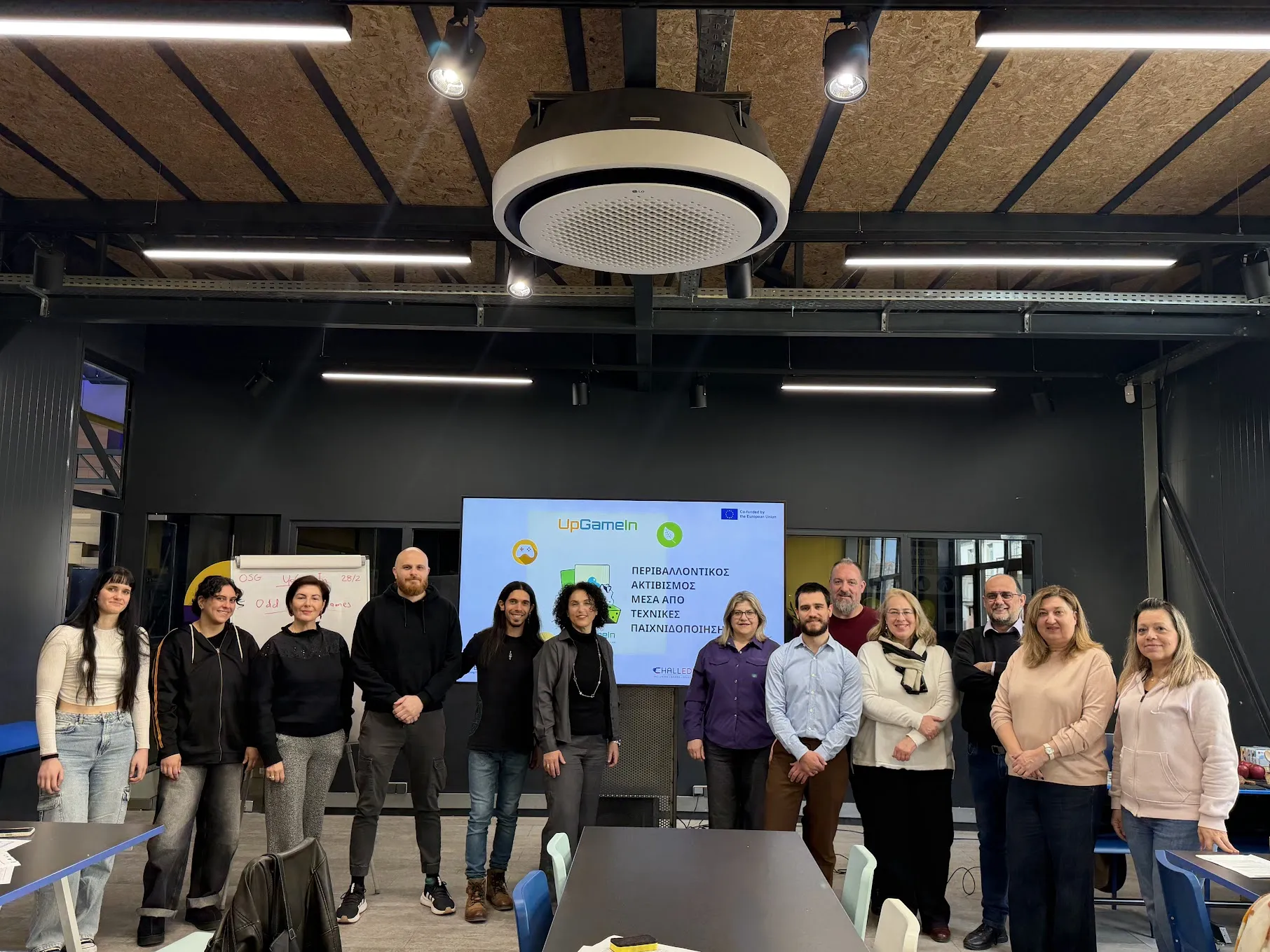
On 28 February 2026, we opened the doors of JOIST Innovation Park in Larissa for the first public presentation of the UpGameIn VET Training Guidelines. It was the first time the four guidebooks met the people they were written for — local VET educators, adult trainers, and game designers — outside of the partner consortium.
The Mission: Making the Guidelines Useful
After the LTTA in Larissa last November, we had four guidebooks on Inclusivity, Accessibility, Circular Economy, and Environmental Activism Through Gamification Techniques. What we did not yet have was proof that the material held up when used by actual practitioners. This workshop was that test.
What We Did
We designed the day as a working session, not a presentation.
- Walking Through the Guidelines: We opened with a short tour of the four guidebooks, showing how each one connects back to the broader UpGameIn Resource Library and how the lesson plans are structured.
- Facilitating a Lesson, Live: Instead of describing the lesson plans, we ran one. Participants took the role of learners, so they could feel the pace and mechanics before being asked to deliver them.
- Adapting to Real Contexts: In small groups, participants picked a guidebook and worked on how they would adapt one of its modules to their own programme — a VET course, an in-house training, or a studio workshop.
- Talking Honestly: We closed with an open discussion about what is realistic inside a VET curriculum today, and what still needs support — from institutions, from funders, and from us.
What We Learned
Three things stood out from the day:
- The lesson plans survive contact. Educators picked them up and ran with them faster than we expected, which is the best sign a curriculum can give.
- Accessibility is the gateway topic. Participants often started with the Accessibility guidebook and used it as the way into the broader conversation about inclusive and sustainable design.
- Context matters more than content. The same lesson plan looks very different inside a public VET school, a studio’s internal training, and an NGO-run programme — and the guidelines hold up in all three, as long as you adapt.
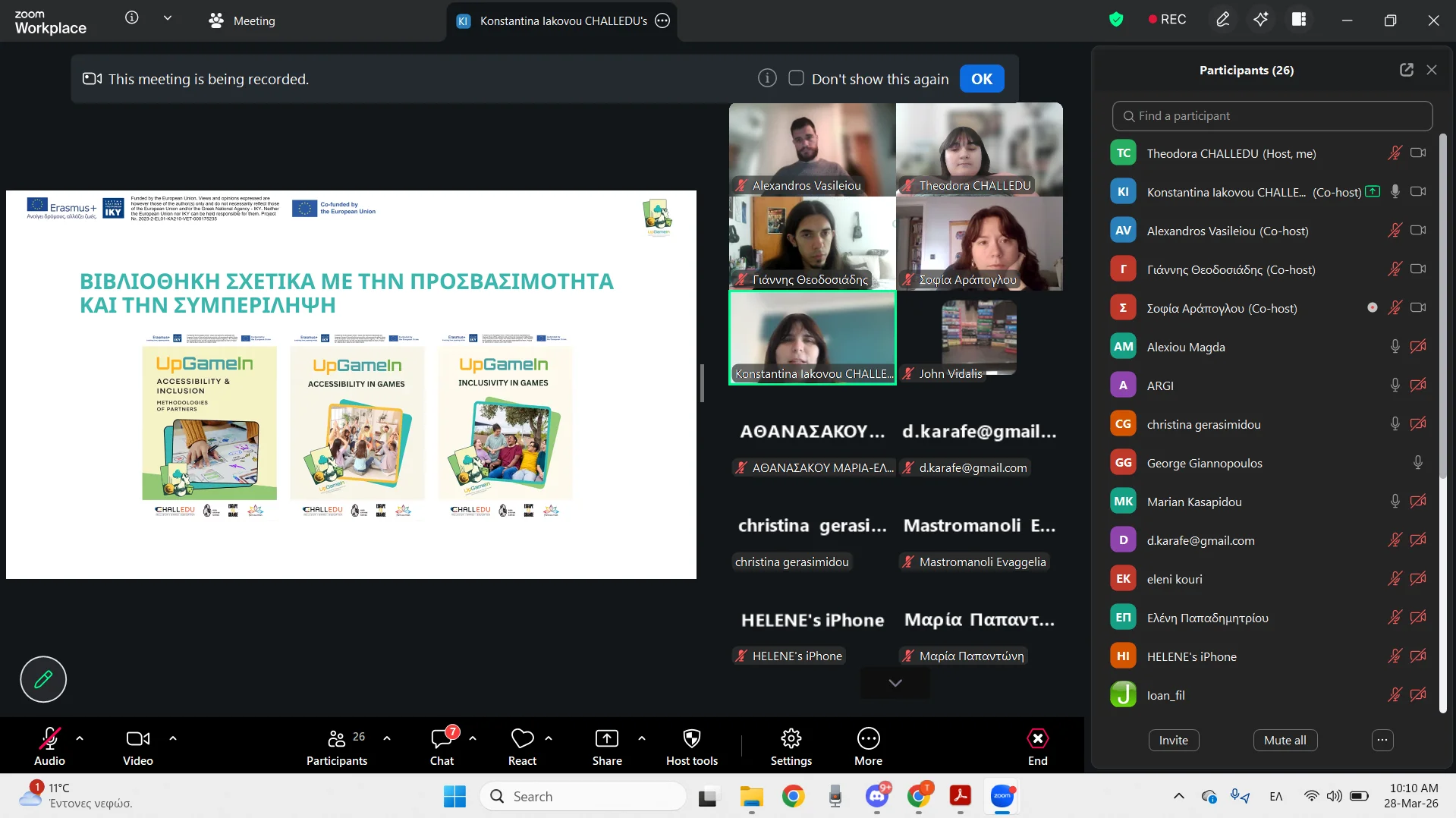
Participants left with printed copies of the guidebooks, concrete ideas for their own programmes, and an invitation to the follow-up online webinar we co-hosted with Challedu a month later.
The guidelines are now a living document in the hands of the people who will actually use them. That is exactly the place we wanted them to end up.